Centralized vs. Per-Client Billing Architecture for AI Channel Spend
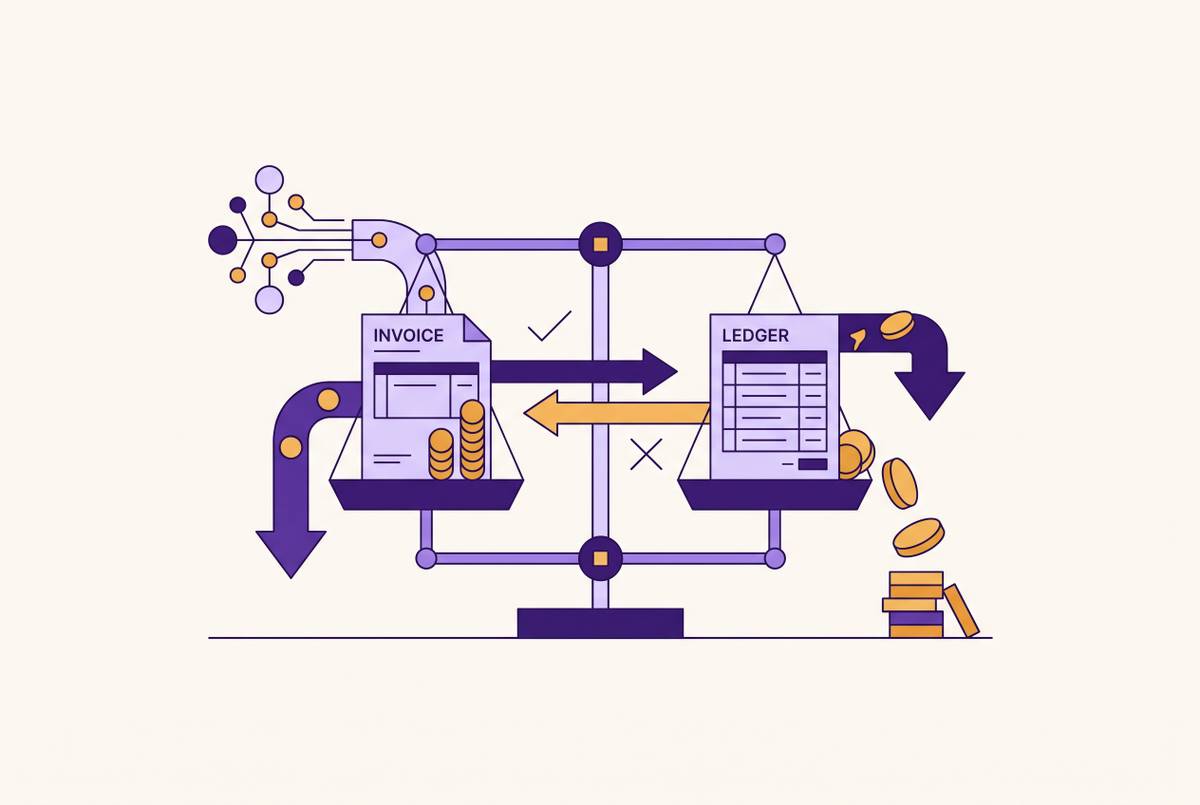
Centralized accounts pool volume but create audit risk as AI platform policies shift monthly.
Conversational AI advertising stopped being an experiment sometime in early 2026. ChatGPT ads launched February 9, and inside 200 days OpenAI's ad business hit a $1 billion annualized revenue run rate, with tens of thousands of advertisers active across more than 40 countries by September, Beet.TV reports. A channel growing that fast needs a real account structure, not discretionary test budget, but most teams haven't actually picked one. They inherited a billing setup from search or social, or just used whatever their DSP happened to offer, and that default is about to cost them.
What makes AI channel billing structurally different from search and social
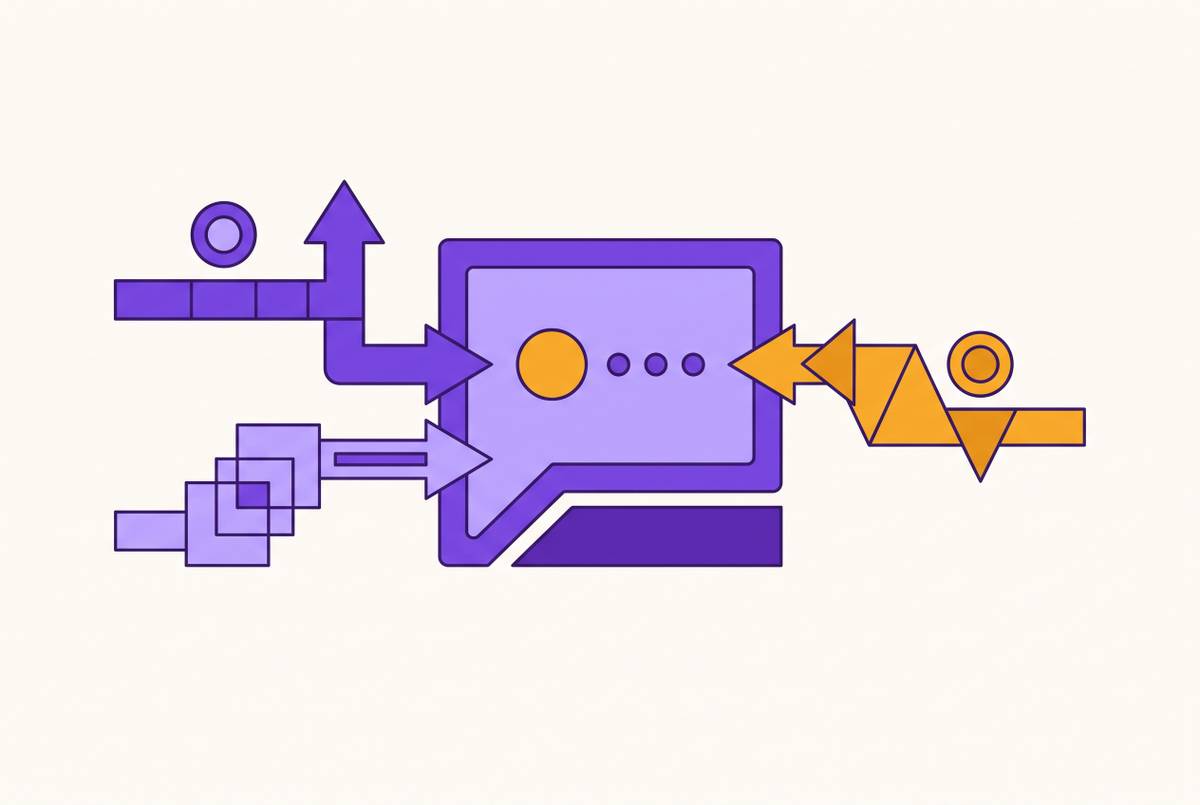
The mechanics that drive AI ads don't map onto what programmatic teams already know. Ads get matched to a conversation through context hints and semantic reads on the current prompt, not keyword bids or audience segments, so campaign setup works differently before billing even enters the picture.
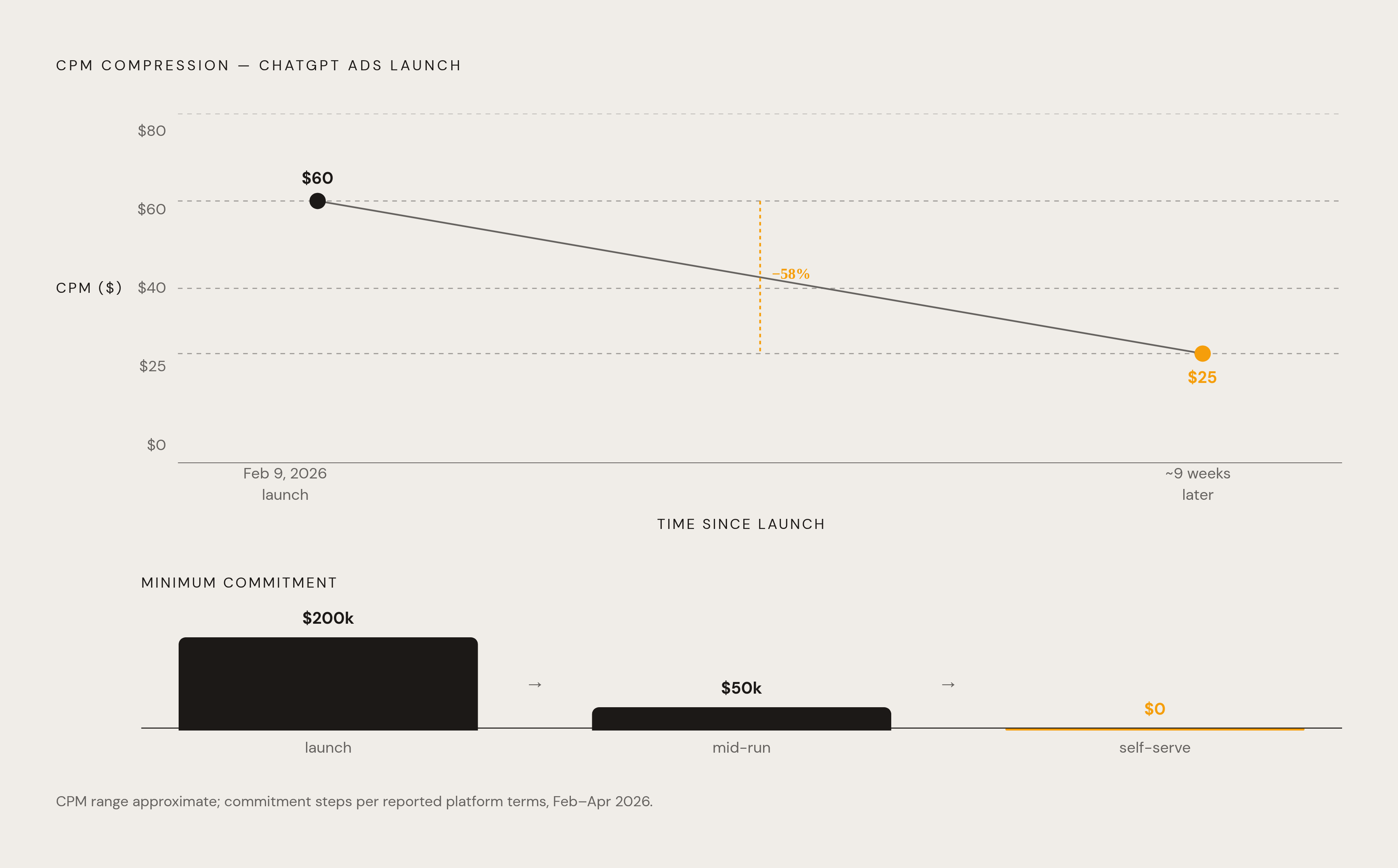
Pricing behavior compounds the problem. CPMs on ChatGPT opened around $60 at launch and compressed to as low as $25 within a few months, which makes margin management far harder to standardize across a client roster than on a platform where CPMs settled into predictable bands over a decade.
Access rules move just as fast. OpenAI dropped its minimum commitment from $200,000 to a $50,000 floor, then to fully self-serve with no minimum shortly after, a shift that ran through several policy revisions in a matter of months. Any account structure built for this platform has to survive a platform that keeps rewriting its own rules.
Ad surfaces don't behave consistently either. Sponsored answer cards, product spotlight units, and contextual sidebar placements each carry different CPMs, different UX constraints, and different inventory availability, so a billing setup tuned for one surface won't hold up on another. Attribution offers no shelter, since last-click doesn't work in a conversational environment, and the reporting sitting on top of whatever architecture a team picks can't lean on habits agencies built for search. More moving parts, faster platform change, weaker measurement footing: all three raise the cost of getting the architecture wrong.
How centralized billing works and what it controls
Centralized billing means one master account, a DSP seat, a platform account, or an agency trading desk, holds the actual spend relationship with the ad platform. Client campaigns sit as sub-entities or line items beneath that structure.
The holder of that master account gets a single consolidated invoice, one dashboard showing spend across every client at once, and room to move budget between clients without going back to the platform to renegotiate access. It also gets pricing leverage tied to volume, which mattered a great deal early on, when OpenAI's $200,000 minimum only made sense pooled across an entire agency's client base.
What it doesn't get automatically is transparency at the client level. Nothing about a centralized account hands a client their exact CPM or shows them how a bid got set, unless someone builds a reporting layer specifically to do that. The setup works fine when clients are buying a managed service and expect the agency to run things on their behalf. It breaks the moment a client wants audit rights or wants to eventually take the account in-house, and agencies that treat centralized billing as the default rather than a deliberate choice are the ones who get that conversation wrong.
The AI channel angle is specific to the moment. During the period when OpenAI's minimum commitment was still high, agencies with centralized accounts could pool spend across clients to meet access thresholds. That particular dynamic shifted once OpenAI dropped its minimum, but the same pattern will recur each time a new AI publisher opens for business.
How per-client billing works and what it trades away
Per-client billing flips the ownership. Each client holds its own account and its own direct billing relationship with the platform, and the agency operates inside that account as an authorized user rather than as the account holder.
Clients get a direct invoice with full cost visibility, no agency sitting between them and the platform's bill. The account and its history travel with the client if they switch agencies or bring buying in-house, and the client can check spend, CPMs, and bidding decisions any time, without asking anyone's permission.
What the agency gives up is scale. Spend fragments across separate accounts, so there's no pooled volume to negotiate better pricing or secure priority access when inventory is tight. Setup and billing admin get rebuilt account by account, and on a platform that revised its ad policy multiple times between April and August 2026, that repetition adds up fast. Shifting budget in response to a real-time opportunity means logging into each client's account separately instead of making one change centrally.
In-house teams land here almost automatically, since their spend already sits inside one brand's accounts. But in-house programmatic leads face a version of the same question: which business unit or market actually owns the account, and who owns the data piling up inside it over time.
The five variables that determine which architecture fits
Client mix and trust level decide more than anything else on this list. Centralized billing suits clients buying a managed service who don't expect line-by-line audit rights. Per-client billing becomes necessary once a client is sophisticated enough to eventually want its own stack. On a platform revising policy four times in four months, a client who later learns their spend sat inside an opaque shared account during one of those changes is going to ask hard questions, and the agency won't have a good answer ready.
Spend concentration changes the math directly. A few large clients make per-client architecture cheap to run, and the volume-leverage case for centralizing barely applies. Spread that same budget across many small accounts, each spending in the $2,000 to $10,000 monthly range typical of early AI channel tests, and centralizing captures real aggregate volume that no single small account could get on its own.
How many AI publishers the team buys across matters more with each passing month. OpenAI's self-serve door is open, and other large language model environments are activating ad inventory of their own. A centralized DSP seat spanning multiple AI publishers, rather than one separate account per publisher, deserves consideration as a third option on its own terms, since each new publisher raises the same account-structure decision again.
Attribution and reporting requirements expose the weak point in both models. Last-click doesn't work in a conversational setting, so a centralized account needs a deliberate reporting layer built on top of it to give clients anything meaningful. Per-client accounts make it easier to isolate one client's numbers, but they don't solve how measurement gets done. They just hand the client the ambiguity directly instead of routing it through the agency.
Portability expectations settle the question for anyone still undecided. If there's a real chance a client eventually brings AI buying in-house, and that's the normal pattern once a channel matures, per-client architecture keeps that door open without a painful migration later. Centralized architecture creates a switching cost that's invisible on day one and awkward the day the client decides it wants out.
How centralized billing creates margin risk specific to AI channel dynamics
The CPM compression on ChatGPT, from roughly $60 down to around $25 in about nine weeks, hit every client sitting inside a centralized account at the same moment. That's the risk in concrete terms: margin structures quoted to clients at launch stop matching the blended rate the account actually runs once compression sets in.
Category matters too. Finance, insurance, and enterprise software tend to command premium CPMs, so a centralized account mixing those clients with lower-CPM categories produces a blended number that hides what's really happening at the individual client level, unless someone deliberately builds separation inside that shared pool.
Policy risk stacks on top of pricing risk. OpenAI revised its ChatGPT Ads policy multiple times between April and August 2026, and in a centralized account, each revision hits every client campaign simultaneously. The agency absorbs the work of updating targeting, creative, or bids across the whole roster at once. There's a fair counterargument here: doing that update once and pushing it out beats doing the same work multiplied by client count under a per-client setup, and for teams with the right tooling, that's a real advantage. But it doesn't erase the underlying exposure. Centralized billing on this channel demands tighter internal margin tracking than it ever did on a mature platform, because the CPM floor keeps moving and the policy keeps changing under it, and an agency that doesn't track margin at the client level inside that shared pool will find out the hard way which clients it's actually losing money on.
How per-client billing creates operational drag as the AI publisher landscape expands
The number of AI surfaces carrying ads is only going up. Beyond ChatGPT's self-serve rollout, multiple large language model environments are building out inventory, and Verve Group activated conversational intent signals from major LLM environments back in March 2026. More surfaces are coming, and each one forces teams to decide again how to structure their accounts.
Per-client billing on one platform is manageable. Per-client billing spread across six or eight AI publishers, each with its own account structure, its own billing cycle, its own creative specs, turns into administrative weight that grows with every publisher added. That strain isn't hypothetical: marketers already stitch together roughly ten separate data sources just to get a single view of a customer, and only 31% say they're satisfied with their ability to unify them, Salesforce's 2026 State of Marketing report found. Layering per-client AI accounts across multiple publishers on top of that fragmentation makes an existing problem worse, not better.
This drag hits hardest for agencies running a lot of small AI channel clients with separate account setups. In-house teams and agencies with a concentrated roster feel it far less. One mitigation works regardless of billing model: a DSP seat that buys across AI surfaces through a single integration keeps the account count from multiplying.
What a hybrid architecture looks like in practice
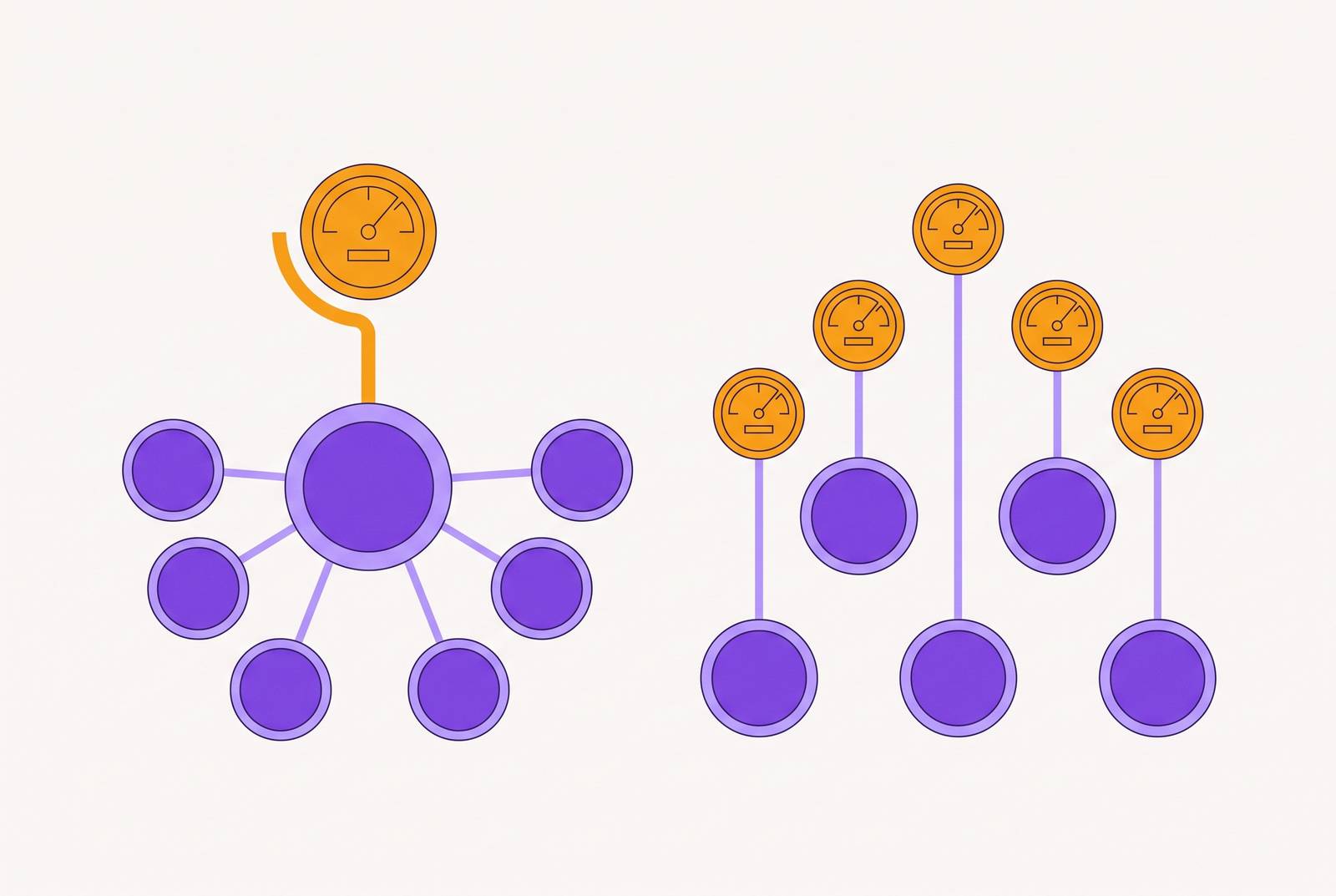
The workable middle ground splits the two questions apart. Centralize the buying infrastructure, the DSP seat, the exchange relationships, cross-publisher access, while keeping billing at the client level wherever audit rights or portability actually matter. Treating these as one decision, which most teams do by default, causes most of the friction described above.
In practice, that means the agency holds one managed seat inside a DSP that reaches across AI publisher inventory, client spend flows through that seat, and it gets tracked and invoiced back to each client individually. The agency keeps its operational efficiency and its volume leverage, and clients keep the cost visibility they'd expect from a direct account. None of this is new. Programmatic trading desks have run display buying this way for years. It just takes deliberate design on AI channels, because the platforms are newer and the account conventions haven't settled yet.
The reporting layer is what makes or breaks the whole thing. A hybrid model only works if the team can pull client-level numbers out of a centralized buying environment, and given how unreliable measurement still is in conversational AI, that takes intentional tagging and holdout test design from the start, not something bolted on after a client asks for a number the agency doesn't have.
In-house teams have their own version: hold the platform account centrally with the media buying team, and allocate cost to each business unit as its own line item. Buying leverage stays centralized, budget accountability stays distributed. A DSP built to buy across AI surfaces, sitting on its own exchange and its own direct publisher relationships, is what makes this hybrid practical at scale, since it removes the need to open a fresh account for every new publisher while still supporting client-level reporting. That's the structural case for a platform built for this channel specifically, rather than AI inventory bolted onto a generalist buying tool built for something else.
Making the architecture decision deliberately rather than inheriting it
Most teams never actually chose their billing architecture. They defaulted into it, and the right moment to fix that is before AI channel spend turns into a real budget line, not after a client relationship has already been built around the wrong setup.
Three questions cut through most of the ambiguity. Will this client ever want to own the account? If yes, per-client from the start avoids a migration nobody wants to run later. Is spend concentrated enough that one client alone could meet a platform's access requirements without help? If yes, the volume-leverage case for centralizing doesn't hold much weight. How many AI publishers will the team be buying across a year from now? Past two or three, whether the buying infrastructure is one DSP seat versus a pile of platform-by-platform accounts determines cost and control more directly than who technically holds the billing relationship.
eMarketer forecasts US AI ad spending reaching $68 billion by 2030. At that scale, this stops being a question teams get to leave unanswered. The ones who decide now build on solid ground. The ones who wait inherit a structure they didn't choose and can't easily unwind. Billing architecture isn't a line item buried in accounting. It decides who can actually see what's happening in this channel, who controls the margin sitting inside it, and who moves fast the next time a new AI publisher opens its inventory. Those are strategic questions wearing an accounting disguise.